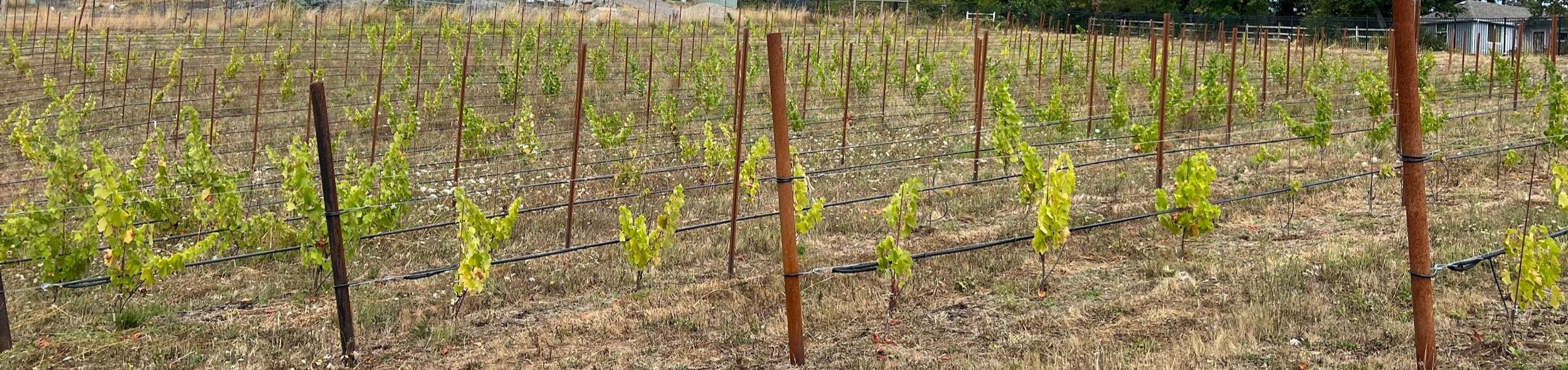
Eleven clones, five rootstocks, a heat dome, and a rare Spanish grape. The unlikely story of how Chaos Vineyard got its name.
The name nods to how we planted in 2020 during the height of the pandemic, itself a chaotic stretch of history, so we leaned into it. Eleven clones of pinot noir went into the ground on five different rootstocks. Our vineyard consultant, Chad Stock, called it "controlled chaos": the idea that all that clonal and ripening diversity would add up to a flavor no single clone could produce alone.
Then chaos got less controlled. A heat dome rolled through that June, temperatures hit 113°F in the vineyard, an all-time record, and held for three straight days. The vines were too young to survive it. We lost 95%.
By then we'd fallen for a varietal called mencia, a red grape from Spain, and decided to replant entirely to it. We kept the chaos in the clones, all four commercially available mencia clones went in, but simplified the rootstock, everything on 101-14 this time.
Mencia is widely planted in Galicia, the rugged northwest corner of Spain, where old vines grow on steep slate hillsides in places like Bierzo and Ribeira Sacra. Wine folks sometimes call it a cross between pinot noir and cabernet franc: bright red fruit and real acidity like pinot, but with more grip, a peppery kick, and a savory, almost wild edge that's all its own. Violets on the nose, cherry and pomegranate on the palate, a finish that lingers. It's been a favorite of sommeliers for years and is only now catching on with everyone else.
We're one of only a handful of mencia growers in the U.S., and we think the Willamette Valley, cool and wet, might be one of the best places outside Spain to grow it. Farming is organic, and we expect to harvest our first vintage for production in 2026.